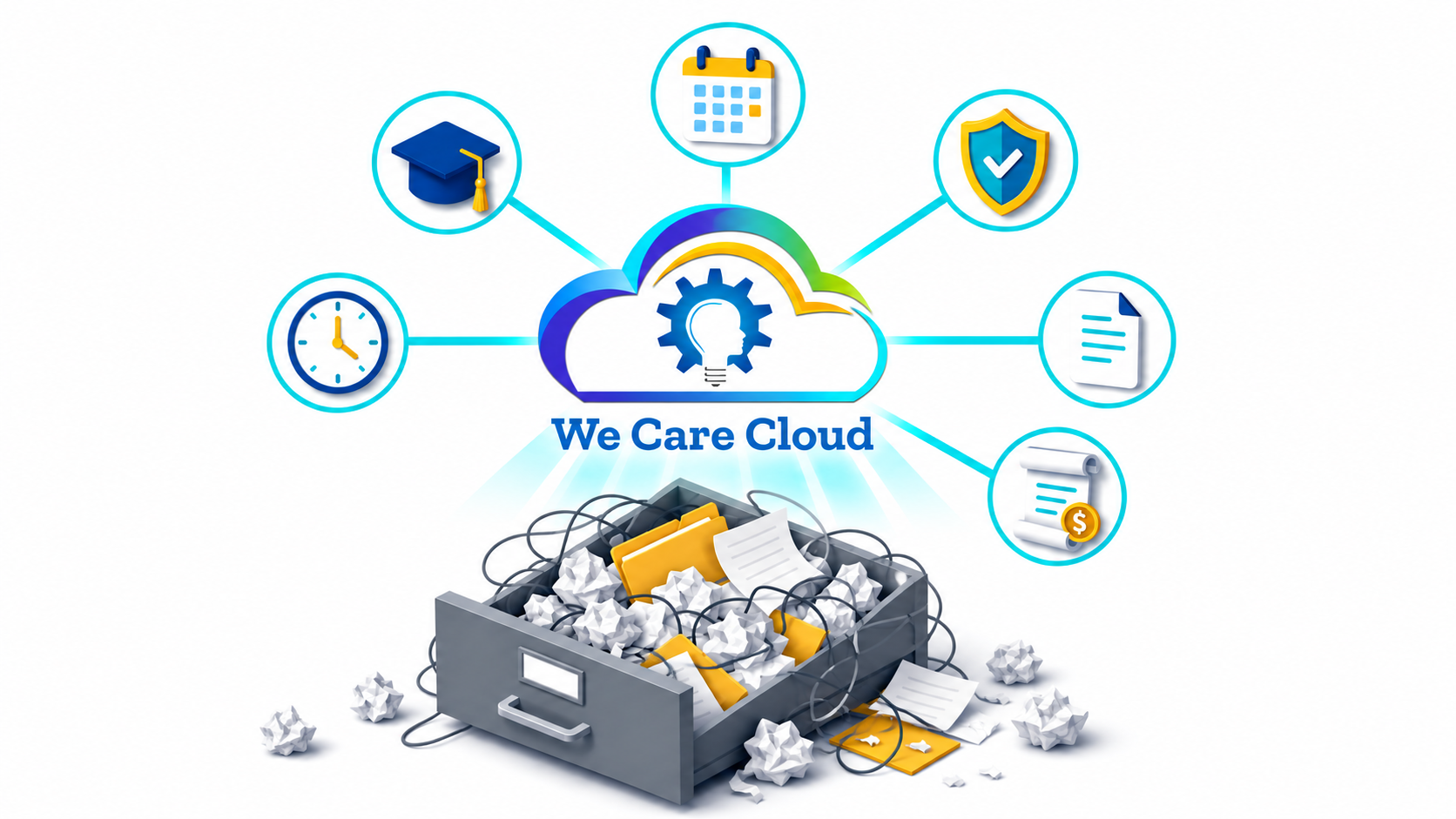
The Operational Case for Ditching Spreadsheets in NDIS Service Delivery
Spreadsheets are not inherently bad tools. They are remarkable for what they were designed to do. But delivering NDIS services is not what they were designed for. Using them as the operational backbone of a registered provider organisation creates specific, predictable failures, and most providers using them know exactly what those failures feel like even if they have not connected them to the tool.
The Version Control Problem
When your roster lives in a spreadsheet, someone has to make sure everyone is looking at the right version. When your HR records live in a shared drive, there is always the possibility that two people are editing different copies. When your case notes are collected in a folder of documents, there is no reliable way to know which ones have been reviewed and which are still in draft.
These version control problems do not just create administrative headaches. They create compliance risk. An auditor asking for a participant's current service agreement should receive one document, not an explanation of which copy in the shared drive is the most recent one.
The Disconnection Problem
The deeper issue with spreadsheet-based operations is not any individual tool. It is the gaps between tools. A support worker is rostered for a shift in one spreadsheet. Their case note obligation sits in another. Their training records are in a third location. Their HR documents are managed by someone in a different folder entirely. None of these systems talk to each other.
When a staff member's police clearance expires, the person managing the roster does not automatically know. When a shift is added for a participant, the invoice system does not automatically update. When a case note goes missing, nobody is notified unless someone checks manually.
One Platform. Participants, Rosters, Case Notes, HR, Training, Invoicing.
We Care Cloud is purpose-built as NDIS One Stop Shop Software. Nothing needs to connect because nothing is disconnected to begin with.
What Connected Operations Actually Look Like
In We Care Cloud, a support worker's profile includes their employment details, allowed participant assignments, uploaded compliance documents with expiry dates, training completion records, and their rostered shifts, all in one place. When a document expires, it surfaces on the dashboard's Expired Certificates widget and triggers an automated reminder to configured recipients. When a shift is assigned, staff receive an email notification automatically. When a case note is not completed within the required window, the system sends reminders and restricts access until the obligation is met.
These automations are not add-ons or integrations. They are built into the same platform that manages everything else. There is no configuration required to connect one system to another, because there is only one system.
The Audit Trail Gap
Spreadsheets have no native audit trail. When a row is changed, there is no record of who changed it, what it said before, or when the change was made. In an NDIS compliance context, this absence is not just inconvenient. It is a governance gap.
WCC records every action taken on the platform in the User Activity Log. Every add, edit, and delete is captured with the user's name, the affected record, the previous value, and the new value, with a timestamp. This log is searchable, filterable, and always available, not because someone set it up specially, but because it runs automatically for everything the platform manages.
Growth Without Chaos
Spreadsheet-based operations tend to work reasonably well when a provider has a small number of participants and a handful of staff. They start to break down visibly when the organisation grows. More participants mean more spreadsheet rows. More staff mean more columns. More shifts mean more chances for a formula to break or a row to be accidentally overwritten.
Providers that wait until their current system is actively failing before considering a platform change typically find the transition harder than it needed to be, because there is more data to migrate, more staff habits to change, and more compliance backlog to address. The time to build on a system that scales is before the current system is at capacity, not after it has already created the problems it was never designed to prevent.
See how We Care Cloud connects rostering, case notes, HR, compliance, and invoicing in one purpose-built platform for Australian NDIS providers.
Discover What WCC Manages for You